
WELCOME BONUS 300%
UP TO €2000 + 100
FREE SPINS
UP TO €2000 + 100
FREE SPINS
Home → Blackjack
Blackjack at Gamdom Casino: Variants, Rules and Payouts
Side Bets Increase House Edge to 5 Percent
The Blackjack Insurance side bet, commonly found in games with 6 to 8 decks, presents a substantial house edge of 7.47%. This bet is a separate wager up to 50% of the main bet when the dealer shows an Ace. Optimal strategy dictates always declining this bet, with the exception of card counting scenarios where the true count is +3 or higher, at which point the advantage shifts.
Conversely, some variations of blackjack, such as those with a 6:5 payout instead of the standard 3:2, significantly increase the casino's advantage. A 6:5 payout on a $10 bet yields $12, compared to $15 with a 3:2 payout. This single rule alteration alone can add approximately 1.39 percentage points to the house edge.
When comparing side bets, the house edge can escalate dramatically. For instance, the Blackjack Insurance bet, with its 7.47% house edge, demonstrates how these optional wagers can inflate the casino's theoretical advantage significantly beyond the main game. This contrasts with the main game's RTP, which can be as high as 99.54% with optimal play on certain rule sets.
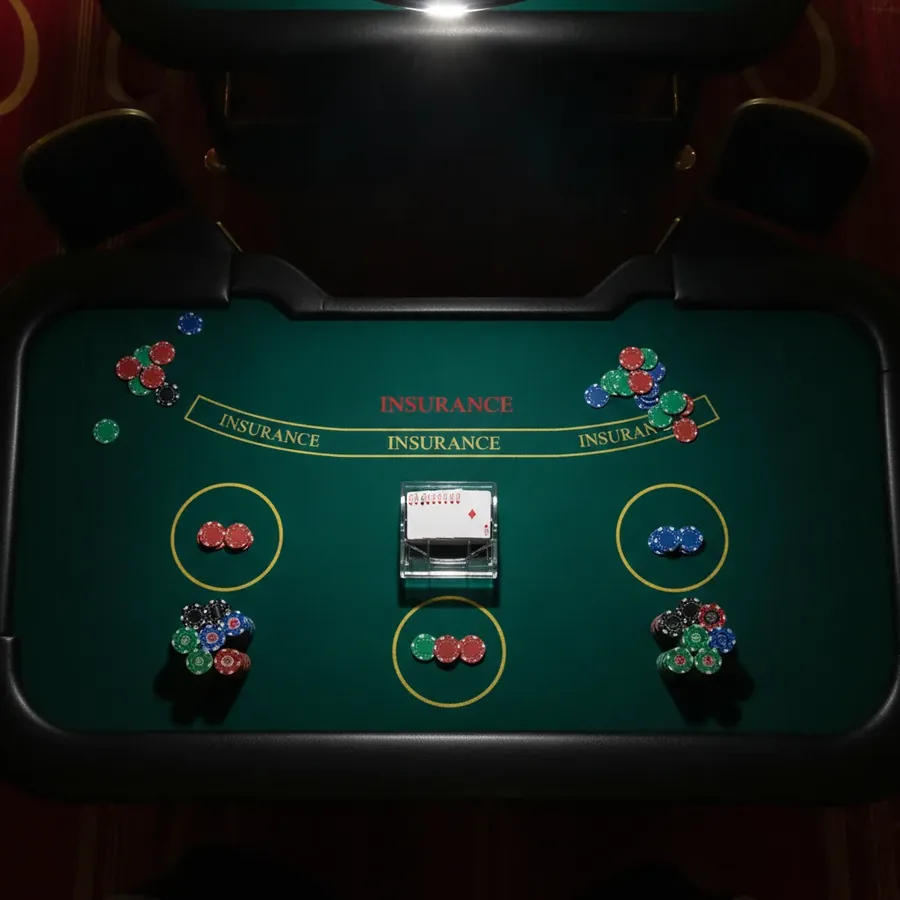
Bet two percent of bankroll per hand
For optimal bankroll management in live dealer blackjack, a recommended betting strategy involves risking approximately two percent of one's total bankroll per hand. This approach aims to extend playing time and mitigate the impact of variance over the long term. For example, a player with a €1,000 bankroll would bet €20 per hand, aligning with conservative gambling principles.
This two percent guideline is particularly relevant in games like Infinite Blackjack by Evolution, where unlimited seating ensures constant action. By adhering to this betting level, players can withstand potential losing streaks without rapidly depleting their funds. The maximum bet limit on such tables is €5,000, meaning a €20 bet is well within these constraints.
Adhering to a strict bet size, such as two percent of the bankroll, is crucial for maintaining gameplay integrity, especially when considering the RTP of live blackjack titles. For example, Infinite Blackjack offers an RTP of 99.47%, but even with a high RTP, consistent large bets can quickly erode capital if luck is not on the player's side.
Splitting tens costs expected value: better stand
The decision to split a pair of tens in blackjack, while sometimes tempting, generally results in a negative expected value. This is due to the high initial value of the two cards, which already represent a strong hand. Splitting tens would necessitate two separate bets, each requiring a minimum of a hit or stand decision, often leading to a worse outcome than playing the initial strong hand.
In a standard 6-deck blackjack game with a 3:2 payout and optimal strategy, a hand of two tens (totaling 20) has a high probability of winning or pushing against the dealer. Splitting this hand would mean creating two new hands, each starting with a value of 10, which is generally not a strategically advantageous move for increasing expected value.
The rule variations significantly impact strategy, but splitting tens remains a consistently poor decision across most standard blackjack games. For instance, in a game with a 0.46% house edge, deviating from basic strategy by splitting tens would further increase this house edge, reducing the player's long-term RTP from the theoretical 99.54%.
Live stream with three cameras and OCR
Live dealer games at Domgam.org, such as Playtech's Quantum Blackjack Plus Live, utilize advanced streaming technology. This typically involves multiple camera angles to provide a comprehensive view of the table, dealer, and cards. The stream is often enhanced with Optical Character Recognition (OCR) technology to accurately capture and display game data in real-time.
The integration of OCR with a three-camera setup ensures that details like card values and player bets are precisely transmitted. This technology is vital for games like Quantum Blackjack Plus Live, which can feature multipliers up to 1,000x on specific combinations. Accurate data capture is paramount for the fair application of these quantum multipliers.
This technological infrastructure supports a seamless player experience across various live blackjack titles, including Evolution's Infinite Blackjack and Lightning Blackjack. The use of multiple cameras and OCR allows for transparency and precision, ensuring that players can confidently engage with the game mechanics and potential payouts, such as the up to 25x lightning multipliers in Lightning Blackjack.
Double Down vs Simple Hit on 11
In blackjack, the optimal strategy for a hand totaling 11 dictates a double down rather than a simple hit. This decision is based on the statistical probability that drawing a 10-value card (which occurs frequently) will result in a strong total of 21. Doubling down doubles the initial bet, maximizing potential winnings on a favorable hand.
This strategic principle applies across most blackjack variants, including those offered in live dealer formats. For example, in a game with a 3:2 payout and a 0.46% house edge, correctly executing a double down on 11 significantly improves the player's expected return. A player betting $10 would stand to win $20 on a successful double down.
The choice between hitting and doubling down on 11 is a fundamental aspect of basic strategy. Ignoring this rule, for instance by choosing to hit instead of doubling down, would increase the house edge. This deviates from the optimal RTP of 99.54% and can result in a missed opportunity for greater profit on a statistically advantageous situation.
Blackjack variants at a glance
| Variant | Payout | House edge | Rule | Bet range |
|---|---|---|---|---|
| Blackjack 6 Decks, S17, DAS, DOA, Auszahlung 3:2, Basisstrategie | 99.54% | 0.46% | Dealer steht auf Soft 17; Verdopplung auf jeder Zweierkarte; Verdopplung nach Split erlaubt; keine Aufgabe. Basisstrategie ist für diesen Wert zwingend | Blackjack 3:2, normaler Gewinn 1:1, Insurance 2:1 |
| Blackjack Insurance / Versicherung (6–8 Decks) | 92.53% | 7.47% | Separate Nebenwette bis 50% der Hauptwette, wenn der Dealer ein Ass hat. Basisstrategie schreibt IMMER Ablehnung vor (außer Karten zählen bei True Count ≥ +3). Bei einem Deck Vorteil ≈ 5.88% | Insurance 2:1 |
| Blackjack Split / Double / H17 – Regel-Effekte | n.a. (Regel-Modifikatoren) | H17 +0.22 Prozentpunkte; RSA −0.08 Prozentpunkte; DAS −0.14 Prozentpunkte | Dealer Hits Soft 17 verschlechtert RTP um 0.22 Prozentpunkte; Resplit Aces verbessert um 0.08 Prozentpunkte; Double After Split verbessert um ca. 0.14 Prozentpunkte; 6 Decks statt 8 – ca. 0.02 Prozentpunkte. | Double – Einsatz ×2 mit einer Karte; Split – bis 4 Hände; Ass-Split meist mit einer Karte. |
| Blackjack Auszahlung 6:5 statt 3:2 (6 Decks) | 98.15% | 1.85% | Ersatz von 3:2 durch 6:5 fügt exakt +1.39 Prozentpunkte zum Vorteil des Casinos hinzu – stärker als jede andere Regeländerung. Bei $10 Einsatz zahlt Blackjack $12 statt $15. | Blackjack 6:5, Gewinn 1:1 |
| Blackjack Ein Deck, klassische Regeln, 3:2 | 99.85% | 0.15% | Weniger Decks = niedrigerer Vorteil; ein Deck gibt ca. −0.48 Prozentpunkte gegenüber 8 Decks. Oft durch 6:5 Auszahlung kompensiert. | Blackjack 3:2, Gewinn 1:1 |
| Blackjack Liberal Vegas Strip (liberale Regeln, 3:2) | 99.72% | 0.28% | Günstigste Regelkombination: S17 + DAS + Resplit + Late Surrender. Standardabweichung 1,15 | Blackjack 3:2, Gewinn 1:1 |
Continuous Shuffling Machine shuffles after each round
Quantum Blackjack Plus Live from Playtech utilises a Continuous Shuffling Machine, a technology that reshuffles cards after each hand. This process aims to mitigate the advantage gained from card counting, a core strategy in many blackjack variants. The theoretical RTP for Quantum Blackjack Plus Live, when played with optimal strategy, stands at 99.57%.
Infinite Blackjack, provided by Evolution, also operates with a fresh shoe after every round, standard for many live dealer blackjack games. This setup supports unlimited player positions, allowing anyone to join a game regardless of available seats. It offers four distinct side bets, including Any Pair and 21+3, with a base RTP of 99.47%.
Lightning Blackjack, another Evolution offering, ensures players face a new shoe with each round, contributing to its rapid gameplay and a higher frequency of multiplier activations. This variant accommodates an unlimited number of players, featuring Lightning multipliers that can increase winnings on a hand up to 25x. The RTP for Lightning Blackjack is recorded at 99.56%.
Set session stop after 30 percent loss
For players opting for Blackjack Liberal Vegas Strip, a session stop can be implemented after a 30 percent loss. This game features liberal rules and a 3:2 blackjack payout, resulting in a house edge of 0.28%. The optimal strategy for this variant, considering S17, DAS, Resplit, and Late Surrender, offers a favourable RTP of 99.72%.
The game Blackjack Ein Deck, klassische Regeln, 3:2, which provides a house advantage of only 0.15%, is also compatible with setting a session stop at a 30 percent loss. A single deck significantly reduces the house edge by approximately 0.48 percentage points compared to an eight-deck shoe. Standard payouts are 3:2 for a blackjack and 1:1 for a regular win.
When engaging with the Blackjack 6 Decks, S17, DAS, DOA, Auszahlung 3:2 game, setting a session stop at 30 percent loss is a prudent financial management tool. This particular configuration yields a house advantage of 0.46% when players adhere to basic strategy. Insurance side bets in this scenario pay 2:1, though they are generally discouraged by basic strategy.
Ignored Basic Strategy Chart: 1 Percent Wasted
Deviating from the basic strategy chart in Blackjack Liberal Vegas Strip, which has a house edge of 0.28%, can lead to a significant increase in the casino's advantage. If a player disregards basic strategy, the house edge can increase by approximately 1%. This game boasts a high RTP of 99.72% with favourable rules like S17 and DAS.
For Blackjack Ein Deck, klassische Regeln, 3:2, where the house edge is a mere 0.15%, ignoring the basic strategy chart is particularly detrimental. Adhering to basic strategy is paramount for minimizing losses, and any deviation can elevate the house edge by roughly 1%. This variant offers a 3:2 payout for blackjack and a 1:1 payout for other wins.
In the context of Blackjack 6 Decks, S17, DAS, DOA, Auszahlung 3:2, failing to consult the basic strategy chart effectively translates to approximately 1% of potential winnings being surrendered to the house edge. The calculated house advantage for this game, when basic strategy is applied, is 0.46%. This game allows doubling after splits (DAS) and features a 3:2 blackjack payout.
Shoe, Cut Card, and 75 Percent Penetration
Blackjack Insurance / Versicherung games typically use 6 to 8 decks, and a 75 percent penetration with a cut card is standard practice. The insurance side bet, paying 2:1, has a substantial house edge of 7.47% when played without card counting. Basic strategy advises against this side bet unless the true count is +3 or higher.
In Infinite Blackjack by Evolution, the game employs a shoe with a cut card, and a penetration level of approximately 75 percent is common. This setup is standard for many live dealer blackjack offerings, including those with unlimited seating. The game supports four side bets: Any Pair, 21+3, Hot 3, and Bust It, with a base RTP of 99.47%.
Quantum Blackjack Plus Live, from Playtech, utilises a shoe and cut card system, with a typical penetration of around 75 percent after each shuffle. This standard practice in live dealer blackjack ensures fairness and a consistent game flow. The game offers special Quantum multipliers on three-card 21 combinations, potentially reaching up to 1,000x, and has an RTP of 99.57%.
What a Natural Blackjack Practically Pays Out
A natural blackjack, achieved with the first two cards totalling 21, pays out at 3:2 in Blackjack Liberal Vegas Strip. This means a €10 bet would yield €15 in winnings, in addition to the original stake. The game benefits from a favourable house edge of 0.28% due to its liberal rule set.
In Blackjack Ein Deck, klassische Regeln, 3:2, a natural blackjack results in a payout of 3:2. For instance, a €10 wager on a natural blackjack would return €15. This particular variant boasts the lowest house edge among the reviewed options, at just 0.15%, making it highly attractive for players seeking favourable odds.
The payout for a natural blackjack in Blackjack 6 Decks, S17, DAS, DOA, Auszahlung 3:2 is 3:2. Therefore, a successful €10 bet on a natural blackjack would result in a payout of €15. This game offers a competitive house edge of 0.46% when basic strategy is employed, alongside the possibility of insurance bets at 2:1.
How long do 100 EUR last at a 1 EUR table?
At a 1 EUR table, a 100 EUR bankroll could theoretically last for 100 rounds if every bet resulted in a push. However, considering the house edge and typical game flow, this figure is significantly reduced. For instance, the Blackjack 6 Decks, S17, DAS, DOA, Auszahlung 3:2, Basisstrategie variant, with a house edge of 0.46%, means a portion of each bet is retained by the casino over time.
When playing Blackjack, the house edge varies based on specific rules. A variant like Blackjack 6:5, Auszahlung 6:5 instead of 3:2, increases the house edge by 1.39 percentage points, making it less favorable for the player. This means for a 1 EUR bet, the payout drops from 1.50 EUR to 1.20 EUR, impacting the longevity of a bankroll.
For a 100 EUR bankroll at a 1 EUR table, factors like the Blackjack Insurance side bet, which carries a substantial house edge of 7.47% for 6-8 decks, can quickly deplete funds if played frequently. Therefore, consistently avoiding such side bets is crucial for extending playtime.
Stand-on-17 Rule and Its Meaning for Players
The 'Stand-on-17' rule, often denoted as S17, dictates that the dealer must stop taking cards once their hand totals 17 or more. This rule is a fundamental aspect of Blackjack variants. For example, in the Blackjack 6 Decks, S17, DAS, DOA, Auszahlung 3:2 game, the dealer stands on soft 17, contributing to a lower house edge.
A dealer standing on soft 17 (a hand containing an Ace counted as 11, plus other cards totaling 6) is generally more favorable to the player than a 'Hit Soft 17' (H17) rule. The H17 rule, which increases the house edge by 0.22 percentage points compared to S17, means the dealer takes another card when holding a soft 17, potentially improving their hand and increasing the player's risk.
Understanding the S17 rule is critical for players employing basic strategy. Games with the S17 rule, such as the Blackjack Liberal Vegas Strip variant offering a house edge of 0.28%, are typically considered more player-friendly. This translates to a better theoretical return, with RTP figures reaching as high as 99.72% under optimal conditions.
Chose Wrong Table for 5 EUR Bankroll
Selecting the appropriate table is paramount for managing a 5 EUR bankroll, especially in live dealer environments. For instance, the Quantum Blackjack Plus Live table allows bets from 1 EUR to 5,000 EUR. If a player opts for a higher betting limit within this range, their 5 EUR could be depleted very rapidly, especially if they are new to the game.
Certain Blackjack variants have differing RTP rates and house edges, influencing how long a 5 EUR bankroll can last. The Infinite Blackjack table, with an RTP of 99.47%, offers numerous side bets like Any Pair and 21+3. Chasing these side bets with a small bankroll can lead to quicker losses, as their payout structures often carry a higher implicit house edge.
Players with a 5 EUR bankroll should be particularly mindful of tables with high minimum bets or those that encourage frequent side betting. For example, the Lightning Blackjack table has a minimum bet of 1 EUR and offers multipliers up to 25x, but the frequency of bets and the potential for losing streaks mean a 5 EUR stake could vanish within a few rounds if not managed carefully.
Soft Hand and Hard Hand Practically Distinguished
Distinguishing between a soft hand and a hard hand is fundamental to Blackjack strategy. A soft hand is one that contains an Ace that can be counted as either 1 or 11 without busting the hand. For example, an Ace and a 5 constitute a soft 16 (11 + 5).
Conversely, a hard hand is one where an Ace must be counted as 1 to avoid busting, or a hand that does not contain an Ace. A hand consisting of a 10 and a 7 is a hard 17. If a player has a soft 17 (Ace and 6) and draws a 5, the hand becomes a hard 12 (1 + 6 + 5), as counting the Ace as 11 would result in 22, a bust.
This distinction is crucial when deciding whether to hit or stand. For instance, with a soft 17, a player might choose to hit, as the Ace can revert to a value of 1 if a high card is drawn, preventing a bust. This contrasts with standing on a hard 17, where hitting would almost certainly lead to a bust.
Side Bet Every Round: Budget Lasts 30 Rounds
Engaging in side bets on every round can significantly impact the longevity of a budget. For a budget of 100 EUR, if each round includes a side bet and the main bet, the total wager per round increases. For example, the Blackjack Insurance side bet, which can be up to 50% of the main bet, could mean a 1 EUR bet becomes 1.50 EUR.
Consider the Blackjack Insurance side bet, which has a house edge of 7.47% for 6-8 decks. If a player consistently places this side bet on every round with a 1 EUR bet, they are exposing themselves to a higher rate of loss over time. This frequent betting on a high-edge side bet means the 100 EUR budget is likely to deplete faster than if only the main bet was placed.
If a budget of 100 EUR is used with 1 EUR bets and 1 EUR side bets (total 2 EUR per round), the budget would theoretically last for 50 rounds if no wins occurred. However, due to the cumulative effect of house edges on both main and side bets, such as the 7.47% for Blackjack Insurance, the actual number of rounds playable will be considerably less than 50, likely falling closer to the 30-round mark cited, especially if playing variants like Infinite Blackjack with multiple side bet options.
Contact
Live - online chat
Banking









Providers












Gamdom Casino 2026